CULTURE IS NO EXCUSE : ISU AND NJABA LGAs PLAN PUBLIC DECLARATION AGAINST FEMALE GENITAL MUTILATION.
A disturbing account of a newborn girl who reportedly died after being taken for Female Genital Mutilation (FGM) without her mother’s consent has renewed calls for an end to the harmful practice in Isu and Njaba Local Government Areas of Imo State.
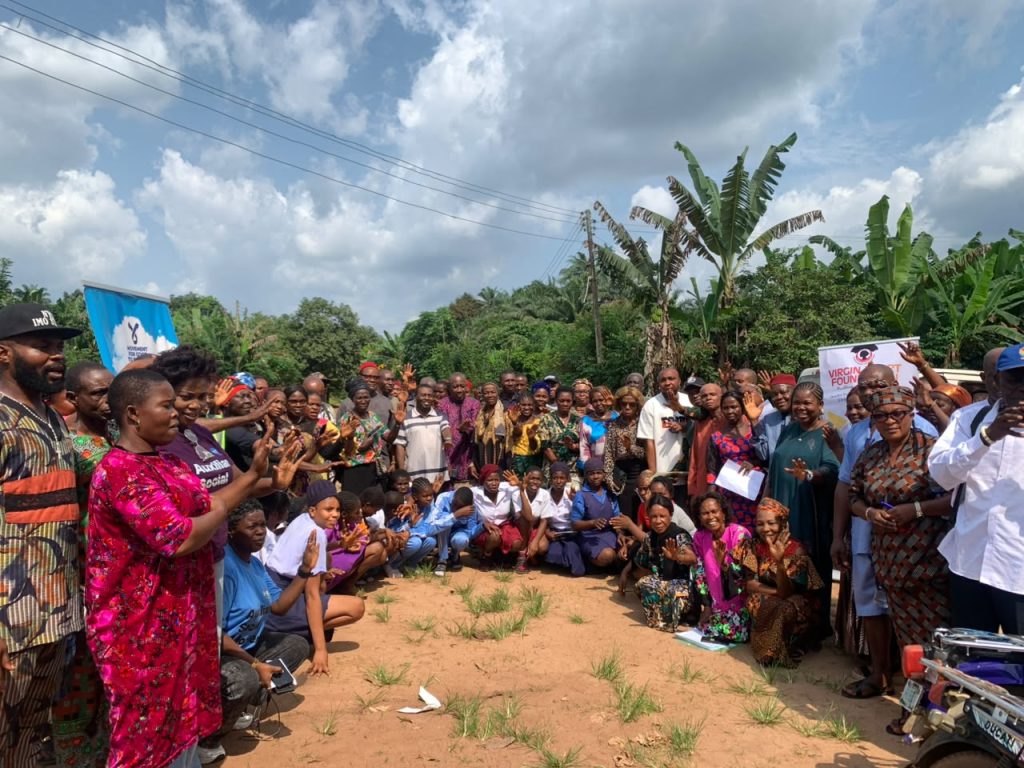
The incident was narrated by a participant during a two-day community-to-community dialogue organised by Virgin Heart Foundation (VHF), in collaboration with the UNFPA-UNICEF Joint Programme on the Elimination of Female Genital Mutilation and the Imo State Ministry of Women Affairs and Social Welfare (MOWA), under the theme delivering the Promise to End FGM. , at the Palace of HRH Eze Ugochukwu, Umundugba Autonomous Community, Isu LGA, and the Njaba Local Government Council Hall, respectively. It brought together traditional rulers, town union presidents, women and youth leaders, community-based organisations and government representatives to discuss strategies for ending FGM.
Recounting her experience, the woman said her mother-in-law had taken her newborn daughter to a traditional birth attendant while she went to bathe. By the time she returned, the child had already been mutilated. She reportedly refused to carry the baby afterwards, and the child subsequently died.
The account triggered discussions on the cultural beliefs and family pressures sustaining FGM. Participants identified the influence of mothers-in-law as a major challenge, explaining that some older women believed the clitoris was disgusting if left intact. Others justified mutilating girls at eight days old on the assumption that babies would not struggle or experience much pain.
The 20 Implementing Communities in Isu and Njaba LGAs, Imo State under the programme have taken action on ending Female Genital Mutilation by holding community to community dialogue towards Public declaration on ending female genital mutilation.
Speaking on the legal implications, Peace Dike, Executive Director of VHF, reminded participants that FGM and other harmful practices are prohibited by law. Citing the Violence Against Persons (Prohibition) Act (VAPP Act), she highlighted the penalties for perpetrators, including a fine of N500,000 and up to 14 years’ imprisonment, as stated during her presentation.
Dike described FGM as an infringement on the fundamental human rights of girls and women, stressing that cultural beliefs must not supersede their dignity, bodily integrity and right to protection. She noted that times had changed and urged communities to abandon harmful practices rather than defend them on cultural grounds.
A major highlight was the presentation by representatives of Ubaheze Orodo Autonomous Community, which has achieved a Public Declaration of Abandonment (PDA) of FGM. Chief Comrade Solomon and Dr Mrs Onyenaakazi Julie explained that their community established an 11-member team involving government, women, youth and religious representatives and 12-member Child Protection Committee to monitor child abuse, Village committees were subsequently formed, trained and deployed to conduct sensitization campaigns.
Chief Ogu Celestine Ifeanyi, representing The Traditional Ruler of Umandugba Communiy, Eze Chukwuemeka Ugochukwu that Isu Communities are prepared to take action against FGM perpetrators and to face prosecution. He warned against medicalization of FGM and reassured that health centres , hospitals, clinics and maternity centres where babies are born will be monitored to ensure compliance towards ending FGM.
The participants, including the stakeholders, Traditional Stool, Community based organizations, FGM Survivors, youths, Adolescent Gender Champions and Advocates on Ending FGM pledged to establish community committees, intensify grassroots sensitization, engage healthcare providers, and monitor newborn girls and report cases to relevant authorities.
For the communities of Isu and Njaba, the message from the dialogue was clear: cultural inheritance cannot justify the violation of a girl’s rights, and ending FGM requires action from every level of community leadership.